
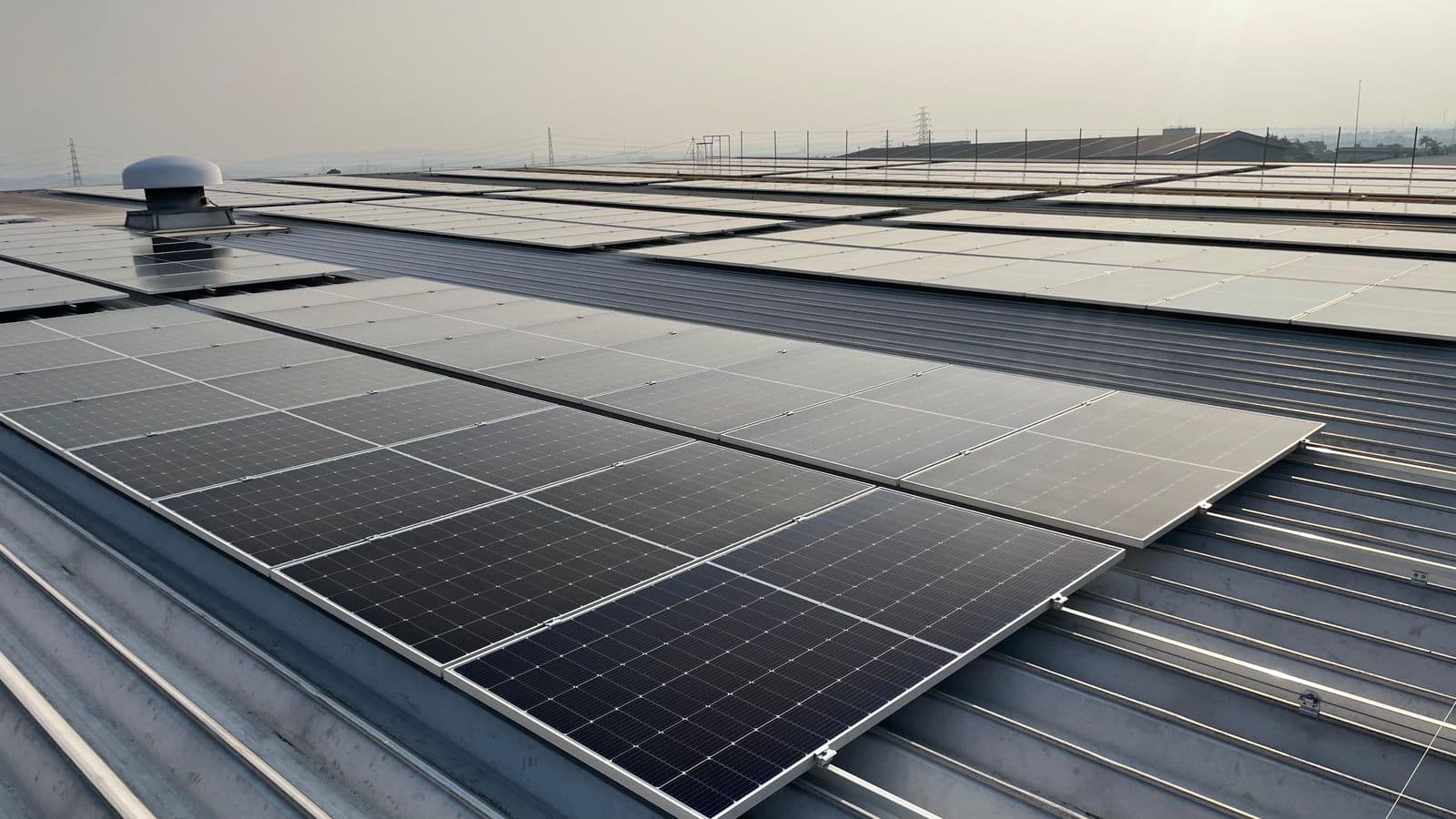
As energy demand continues to grow and awareness of environmentally friendly energy sources increases, solar photovoltaic (PV) technology has become an increasingly attractive solution. This technology enables sunlight to be directly converted into electricity that can be used to power homes, offices, and industrial facilities.
Unlike solar thermal systems, which utilize the sun’s heat to produce hot water, photovoltaic systems are specifically designed to generate electricity. By harnessing the abundant energy of the sun available every day, PV technology offers a clean, renewable, and sustainable source of power.
How Do Solar Panels Generate Electricity?
In simple terms, a solar panel consists of multiple photovoltaic cells connected together. Each cell functions like a small power generator, capturing energy from sunlight and converting it into electrical energy.
These cells are typically made from semiconductor materials such as silicon. This material has the unique ability to respond to sunlight and generate an electric current when exposed to solar radiation.
When sunlight reaches the surface of a solar panel, particles of light energy known as photons interact with the semiconductor material inside the cells. This interaction triggers a phenomenon called the photovoltaic effect, which serves as the fundamental mechanism that transforms light energy into electrical energy.
From Sunlight to Electrical Current
When the photovoltaic effect occurs, the energy carried by photons excites electrons within the semiconductor material. These electrons become energized and begin to move freely, creating an electric current.
The movement of these electrons is captured by conductive layers within the solar cell. The generated electricity is then transferred through electrical wiring and delivered to the system where it can be used to meet various energy needs.
To better understand this process, it can be compared to water flowing through a pipe. The more sunlight the panel receives, the greater the potential amount of electricity it can generate.
A Sustainable Energy Solution for the Future
By adopting photovoltaic technology, communities and businesses can reduce their dependence on fossil-fuel-based energy sources. In addition to helping lower carbon emissions, solar panels can also contribute to long-term electricity cost savings.
As technology continues to advance and the adoption of renewable energy expands worldwide, solar photovoltaic systems are becoming one of the most promising solutions for supporting cleaner, more efficient, and sustainable energy needs for future generations.
